Use the latest browser recommended by Microsoft.
Get speed, security and privacy with Microsoft Edge.

A SMALL CRAFT ADVISORY WILL BE IN EFFECT LATER TONIGHT...

History

Origins

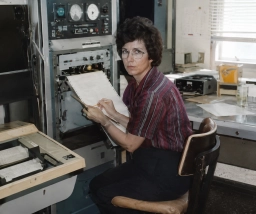
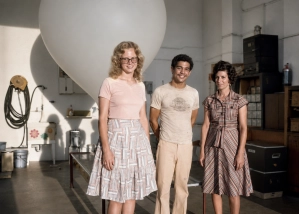
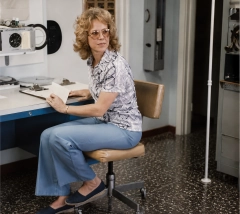
During the early 1950’s the Eastern coast of the United States was hit by a number of hurricanes causing extensive damage and loss of lives. In response the United States funded the formation of 16 upper-air/weather stations in the Caribbean for early detection and warning, one such office was established in Grand Cayman.

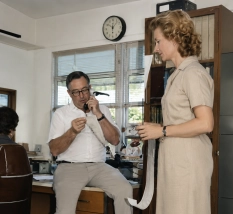
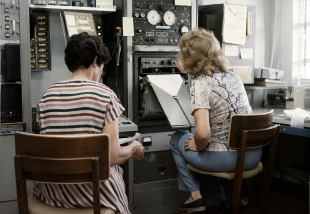
The initial survey and the Cooperative Hurricane Upper Air Station were installed in Grand Cayman in early 1959. It was desired that the services would be run by local personnel, however in Cayman’s case this was not possible as most of the men were seamen by trade. The United States therefore obtained a number of officers to run the station from Trinidad and Tobago, who were replaced by local women.

On 13th April 1976 agreement signed between Agencies of the United States of America and the Cayman Islands Government to jointly run the upper-air station, hence the name cooperative upper-air station.

Origins
Cuban MET Office

Cuban MET Office

Meteorological observations date back to 1937, when under orders from Cuban President Batista observations were taken by a small station consisting of three Cuban officers. Three local men were added at a later time. The office was operated 24 hrs per day but only carried out synoptic observations. In the latter stages the station was managed by Mr. Felix Delarosa, who later obtained political asylum and worked in the U.S.

Decades of Dedication
From humble beginnings with the first meteorological instruments in the 1930s to becoming a fully independent national weather service, our journey reflects the growth and resilience of the Cayman Islands.
The Beginning
1930's

The Beginning

The first meteorological instruments were introduced in George Town, Grand Cayman. A cooperative arrangement with the Cuban Government to broadcast meteorological information to ships via short wave radio from a shore transmitter to the ships receiving station
Hurricane Preparedness Era
1950's

Hurricane Preparedness Era

Following several hurricanes hitting the US East Coast, the US Weather Bureau set up 16 upper air stations across the Caribbean for early detection and warning. A Cooperative Hurricane Upper Air Station (CHUAS) was established in the Cayman Islands, operated jointly by Cayman and the US.
Aviation & International Cooperation
1970's

Aviation & International Cooperation

Meteorology in the Cayman Islands changed significantly. Following an agreement at the Caribbean Meteorological Organisation (CMO), the Jamaican Meteorological Office began providing forecasts and severe-weather warnings for the Cayman Islands. The Department of Civil Aviation became very concerned about the supply of weather information to pilots using the Grand Cayman airport. The problem was becoming particularly acute as the aviation traffic was increasing significantly
Transfer of Operations
1980's

Transfer of Operations

As air traffic into the Cayman Islands continued to expand rapidly, the Cayman Islands Government via the Civil Aviation Department requested a review of meteorological operations to satisfy the safety requirements of the International Civil Aviation Organisation (ICAO) and World Meteorological Organisation (WMO). The Director of Civil Aviation carried out a comprehensive review of meteorological development of the Cayman Islands. As part of the plan, a two-day visit to Jamaica was conducted to meet with the Director of the Jamaican Meteorological Service
Independence in Forecasting
1990's

Independence in Forecasting

The Cayman Islands Civil Aviation Department was granted approval by the WMO to provide its own forecasts and severe weather warnings. This ended two decades of reliance on Jamaica for forecast and severe weather warning service. At the 19th Region 4 Hurricane Committee meeting, held in Nassau, Bahamas, the Cayman Islands Weather Service was given the responsibility for the issuing of Severe Warnings, TAF's, and other critical aviation weather products for the Cayman area
Expansion to Cayman Brac
2003

Expansion to Cayman Brac

An observing branch was opened in Cayman Brac, extending meteorological services across the Cayman Islands and enhancing coverage for inter-island aviation operations.
A New Era Begins
2010

A New Era Begins

Under the National Weather Service Law, the Cayman Islands was established as a stand-alone Government Department.